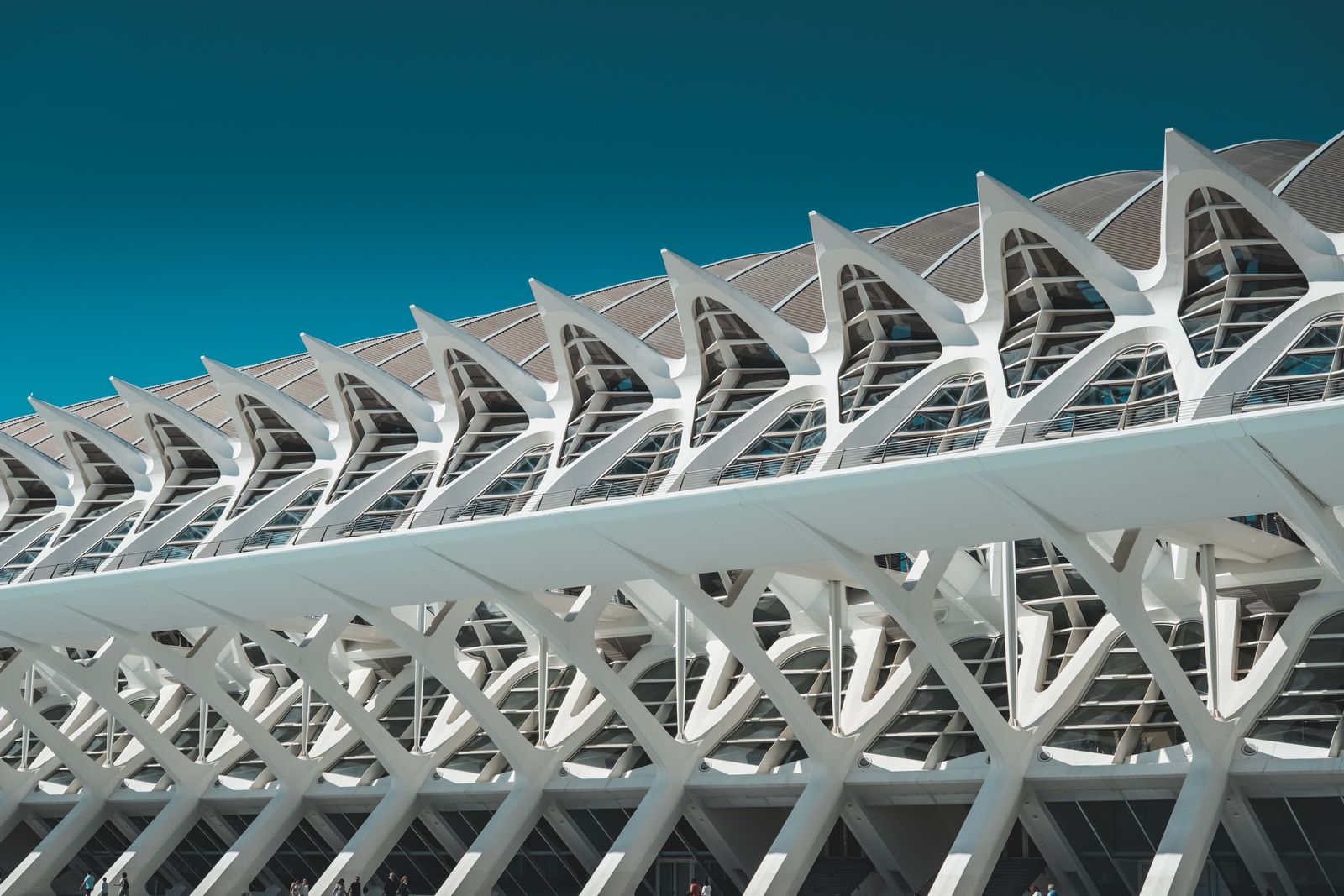
We live in Valencia. We spent years moving between countries, four of them on a sailboat, and this is the city where we finally stopped and put down roots with our kids. It's also where we now meet a lot of the families we coach, face to face.
That makes this guide a bit different from our others, because we're writing it from here. The opinions are the ones we'd give a friend over coffee. The figures (rents, fees, visa thresholds) all come from sources linked at the bottom. Numbers move, rents especially, so use them as a starting point and check again before you sign anything.
If you're still deciding on Spain as a whole, read our broader guide to moving to Spain with kids first, then come back once Valencia makes the shortlist.
Why families choose Valencia
Valencia is Spain's third-largest city. About 840,000 people live in the city itself and about 1.6 million in the wider urban area. That size is a lot of the appeal. There are international schools, good hospitals, an airport and plenty going on culturally, but most of daily life still fits inside a short bike ride or metro trip.
When families tell us why they picked it, the same reasons keep coming up.
The first is the Turia. After the 1957 flood the river was diverted, and the old riverbed became a long park that runs right through the middle of the city. It's full of playgrounds, sports pitches, and running and cycling paths. With kids, it changes how you use the whole city.
Then there's the beach, which is in the city. Malvarrosa and Les Arenes are on the tram network, so going to the beach after school is a normal afternoon, not a day trip.
The weather matters too. Valencia averages over 2,700 hours of sunshine a year. Winters are mild, with January highs typically 15 to 20°C, and summers are hot, around 28 to 32°C in July and August.
And the pace. Valencia is a working city, not a resort. Kids are welcome everywhere, dinner is late, and for much of the year people live outside.
It has its downsides, and we'll get to them. But a lot of families find it hits a balance that's hard to find elsewhere in southern Europe.
Neighbourhoods and towns for families
The first big decision is whether to live in the city or out in the área metropolitana. Both work. They just suit different families.
In the city
Ruzafa (Russafa) is central and lively, packed with cafés, restaurants and independent shops, and it has its own market. If you want to walk everywhere and you like noise and people around you, it's great. If you want a quiet street and some outdoor space at home, less so. Being close to the Turia helps.
Benimaclet started out as a separate village and still feels like one. It's near the university campuses, so there are plenty of students, and the community feel is strong. Families who want a neighbourhood with its own identity, without being right in the centre, often like it.
El Cabanyal is the old fishermen's quarter by the sea, all tiled facades and narrow streets on a grid, and Malvarrosa is the beach neighbourhood next door. If being near the sea comes first for you, this is the obvious choice. The area has been changing fast, so look at specific streets instead of judging the whole district from one visit.
Campanar is further out and feels newer, with more modern apartment blocks and the Turia still within reach. It makes sense if you want a bit more space in a flat and easier access to the towns and schools to the north-west.
There are other good areas. These are just the ones we get asked about most.
Towns outside the city
Plenty of international families end up just outside Valencia, in the towns to the north-west. You get houses with gardens, more room and good school options, and Metrovalencia still connects you to the city.
Godella and Rocafort sit next to each other, both on Metro Line 1. They're leafy, residential and popular with families. Cambridge House, a British-curriculum school, is in Rocafort.
Bétera is at the northern end of Metro Line 1. It's more spread out, with urbanisations of villas and gardens. Mas Camarena, a private school offering International Baccalaureate programmes, is in Bétera.
Paterna is a large municipality on Metro Line 2, made up of several distinct areas, including residential urbanisations and a technology park.
L'Eliana is also on Line 2, further out. It has a strong village feel and plenty of family housing.
One practical point about all of these towns: life is much easier with a car. The metro gets you into the city, but school runs, after-school activities and the weekend shop can add up to a lot of driving. Be honest with yourselves about whether you want that.
You should also know about the floods. In October 2024 a DANA (the severe storm sometimes called gota fría) caused catastrophic flooding in towns south and west of the city, especially around Horta Sud. More than 220 people died in Valencia province. The city centre was protected by the river diversion built after 1957. Wherever you're looking, in the city or outside it, check the flood risk of the specific home and ask about it directly.
Schools
School usually decides where a family ends up living, so get clear on the three main options before you look at a single flat.
Public schools
Public schools are free. Places are allocated mainly by where you live, through your padrón (municipal registration), although you can request other schools. School is compulsory from 6 to 16, and infant classes (Infantil) take children from age 3.
The Valencia-specific issue is language. Valencian is co-official with Spanish in the region, and how much of each is used in the classroom varies from school to school. Ask every school directly. For younger kids this tends to be less of a barrier than parents fear. For older kids who arrive with no Spanish, it can make the first year harder.
The main admissions round usually opens in spring for the following September: May for Infantil and Primary, late May to early June for secondary. An extraordinary round for remaining places runs into September. You'll need an NIE and your padrón registration to apply.
Concertada schools
Concertada schools are privately run and publicly funded. Tuition is free, but extra services can add roughly €100 to €400 a month depending on the school. Many are religious. They can be a good middle ground, especially if you find one with a strong English programme.
International schools
Valencia has a decent choice of international schools. These are the fees for the 2026-2027 school year that we could check directly against what the schools publish:
| School | Curriculum | Location | Published fees (2026-27) |
|---|---|---|---|
| American School of Valencia | American, IB Diploma | Puçol | €7,427 to €9,862 a year, plus a €1,500 one-off capital fee for new students and a €1,250 annual enrolment fee (non-shareholders) |
| British School of Valencia | English National Curriculum | Valencia city | €760 to €995 a month across ten monthly payments, plus a registration fee of €3,250 (€1,600 for siblings and Year 7+) |
| Caxton College | British | Valencia area | €842 to €998 a month from Nursery to Sixth Form (lunch included), plus a €900 enrolment fee for new students |
| Mas Camarena | IB programmes, multilingual | Bétera | Listed on Micole at roughly €300 to €700 a month |
There's also Cambridge House in Rocafort, and the Lycée Français, which a Le Petit Journal guide puts at around €6,000 a year. Several more schools exist, but we've left out fees we couldn't check.
Two bits of advice. Fees are only part of the bill, so ask about uniforms, transport, lunches, materials and trips. And apply early. Popular year groups fill up, so start talking to schools six to twelve months before you plan to arrive.
If you're considering home education instead, even just for a while, Emily has written about homeschooling abroad without being a teacher.
What it costs
Rents in Valencia have gone up sharply. Brains Real Estate puts average asking rents in the city at a record €16.6 per square metre per month in the second quarter of 2026, which is about €1,637 a month for the average flat. For a three-bedroom flat the average asking rent was about €1,692. It varies a lot by district. Ciutat Vella was the most expensive per square metre, while areas further out were cheaper per square metre but the flats were often bigger.
For everything other than rent, here are the Valencia figures from our own cost of living calculator. They're monthly estimates for a family of four, in US dollars, and they're for comparison, not precision:
| Monthly cost | Figure | Source |
|---|---|---|
| Three-bedroom flat, asking rent | about €1,692 | Brains Real Estate, Q2 2026 |
| Groceries | about US$500 | Roamsmith calculator estimate |
| Transport | about US$160 | Roamsmith calculator estimate |
| Utilities (power, water, internet, mobiles) | about US$210 | Roamsmith calculator estimate |
| Private health cover / out-of-pocket | about US$160 | Roamsmith calculator estimate |
| Childcare, one child, full time | about US$550 | Roamsmith calculator estimate |
| Eating out, outings and activities | about US$320 | Roamsmith calculator estimate |
The free cost of living calculator on our resources page lets you compare Valencia with other cities and adjust the numbers for your family. If you're still working out how to pay for the move, our guide to funding life abroad goes through the main options.
Healthcare
Spain's public healthcare is good. In the Valencian Community you get into it through the SIP card (tarjeta SIP). To get one, you need to be on the padrón somewhere in the region and be covered by the Spanish system as an insured person or a beneficiary, usually through social security (for example, because you or your partner work in Spain). You apply in person at a health centre or hospital, and the card is free.
If the public system doesn't cover you, you need private health insurance. For the non-lucrative visa, for example, the consulate asks for a policy from an insurer authorised in Spain that covers 100% of costs, with no deductibles, co-payments or waiting periods. Travel insurance doesn't count.
Lots of families keep private cover even after they're in the public system, mostly for quicker access to specialists and English-speaking doctors. Our guide to healthcare when moving abroad with kids covers what to sort out before you go.
Visas, at a high level
This isn't legal advice. Visa rules change, consulates read them differently, and your own circumstances matter. Always check with the Spanish consulate that covers your area and, ideally, a Spanish immigration lawyer.
With an EU passport you don't need a visa, though you still have to register as a resident. For non-EU families, two routes come up most often.
The non-lucrative visa (NLV)
This one is for people who can support themselves without working in Spain. You need 400% of IPREM (Spain's reference income index) for the main applicant, plus 100% of IPREM for each family member. IPREM is €600 a month in 2026, so that's €28,800 a year for the main applicant plus €7,200 a year for each dependant, or €50,400 a year for a family of four. At least one consulate says plainly that this visa does not allow remote work, so if you plan to keep working, it's the wrong route.
The digital nomad visa
Officially this is the residence authorisation for international remote work. It's for people working remotely for employers or clients mostly outside Spain, and no more than 20% of your income can come from Spanish clients. The threshold is 200% of Spain's minimum wage. The Spanish consulate in Washington puts that at €2,442 a month for the main applicant in 2026, plus €916 for the first family member and €306 for each one after. Some advisers quote a higher figure (about €2,849) by spreading Spain's 14 annual salary payments over 12 months, so check with the consulate you'll apply through.
Both take careful document preparation. Our family visa guide explains how to think about the routes before you get into the detail.
Getting around
Valencia is flat and compact, and easy to get around by bike. There's a public bike-share scheme, Valenbisi, and the EMT bus network covers the city.
Metrovalencia links the city to the towns around it. Line 3 goes to the airport. Line 4, a tram line, goes to the Malvarrosa and Les Arenes beaches. Lines 1 and 2 serve the north-western towns families tend to choose: Line 1 runs out to Godella, Rocafort and Bétera, and Line 2 to Paterna, L'Eliana and on to Llíria.
You can easily live in the city without a car. Out in the towns, most families have at least one.
Climate
Winters are mild and summers are hot, with about 2,700 hours of sun a year and around 460mm of rain. Most of that rain falls in autumn, sometimes in short, intense bursts, which is worth keeping in mind when you choose where to live (see the flooding note above).
July and August are properly hot. Plan those months around early mornings, the beach and air conditioning.
What we'd do
Visit before you pick an area. Spend a week or two here, ideally outside high summer. Do a school run at 8:30am, take the metro in from the town you're considering, and walk the neighbourhood on a weekday evening.
Choose the school before the housing. It shrinks the map quickly. We often see families fall for a flat and then find out the school they want is an hour away each way.
Start the paperwork early. NIE, padrón, bank account, SIP card: the order matters, and appointments can take a while. Our first 90 days checklist walks through the sequence.
Rent before you buy. The market is moving fast, and a neighbourhood can feel quite different after a few months of living in it.
Make an effort with your social life. Valencia has active international and family communities, but they won't come looking for you. Our post on making friends abroad with kids has the approaches we've seen work.
Learn some Spanish, and a bit of Valencian. You can get by in English in parts of the city, but daily life, school letters and the people you meet all get easier much faster if you try.
Come and meet us in Valencia
Most of our work happens online, with families all over the world. Because we live here, though, Valencia is the one place we can also meet you in person. That could be a coffee and a walk around a neighbourhood you're considering, a session during your scouting trip, or a check-in a few weeks after you land, once the admin has piled up and the first rush of excitement has worn off.
If Valencia is on your list, take the free Readiness Score to see where you stand, then book a call and tell us what you're weighing up. And if you're already here, or about to be, we'd love to meet you.
Sources
- Valencia population and climate: Wikipedia, Valencia
- October 2024 floods: Wikipedia, 2024 Spanish floods
- Metro lines and stations: Wikipedia, Metrovalencia, Line 1, Line 2
- Rents, Q2 2026: Brains RE News, Valencia rental market
- School system, concertada costs and Lycée Français estimate: Le Petit Journal Valence
- American School of Valencia fees: asvalencia.org
- British School of Valencia fees: bsvalencia.com
- Caxton College fees: caxtoncollege.com
- Mas Camarena: Micole
- Cambridge House location: cambridgehouse.es
- SIP card: Papelea, Generalitat Valenciana SIP card application
- Non-lucrative visa requirements: Consulate General of Spain in Los Angeles
- IPREM 2026: Costa Luz Lawyers
- Digital nomad visa thresholds, 2026: Consulate General of Spain in Washington, Migratiolex
- Other monthly costs: Roamsmith cost of living calculator (estimates, US dollars), on our resources page
